Legacy Writings
Budō and Proper Practice
A legacy essay on budō as self-directed practice, patient refinement, and the work required to understand principles.
This essay was originally published by Robert J. Hartung III on November 25, 2019. It is preserved as a historical expression of his training philosophy, with light editorial corrections.
Budō can be difficult to define. The term is made of two characters: 武 and 道. The character 武 has several meanings, including bravery, valor, warrior, and military arms. The character 道 may refer to a road, path, course, moral teaching, or journey.
Together they allow several possible translations. Rather than forcing them into one precise English phrase, it can be useful to let their meanings remain in conversation. Here, the important question is how we study and practice budō.
The work of refinement
Budō is a practice. It requires continual self-refinement, self-directed diligence, and regular effort. One does not practice budō without these things.
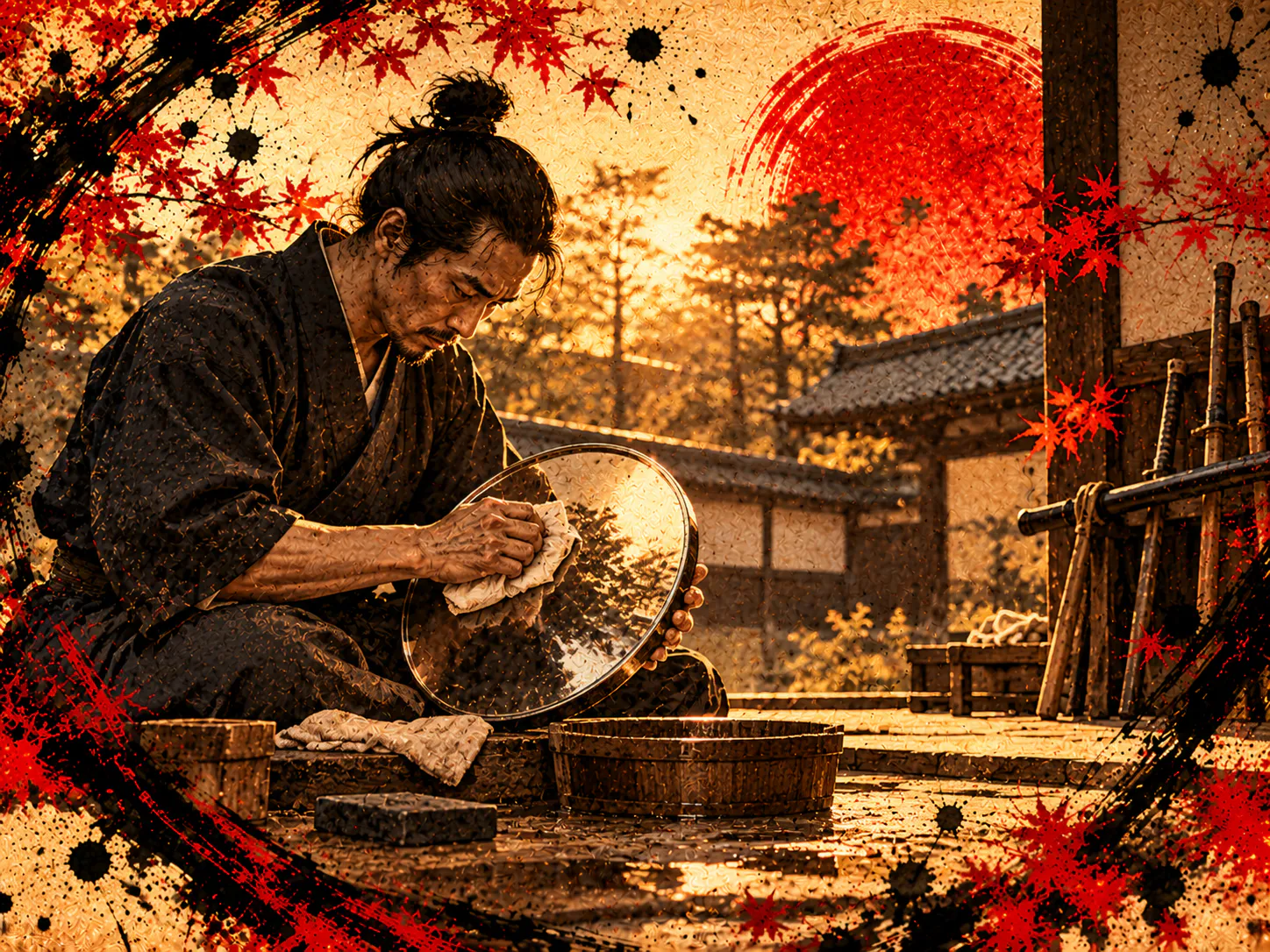
Practice can be compared to polishing a mirror until it reveals a true reflection. Repetition alone is not enough: a mirror can be polished incorrectly or unevenly. Trying to force quick results may damage what we are trying to refine. Good practice requires time, diligence, appropriate pressure, and control. This is what I mean by “proper practice.”
Movement before explanation
Martial traditions have their own progressions and methods of transmission. In earlier approaches, teachers did not always begin by explaining principles. They taught movement and asked students to repeat it. When the student’s practice had developed, the teacher might then reveal more of the principles within it.
Only after many hours of work could the deeper ideas become more than words.
Today, a teacher may begin by explaining principles. That can be helpful, but it also carries a risk. If students are given an answer before developing the movement and attention needed to understand it, they may repeat the explanation without embodying it. Teachers can fall into the same habit when they pass along language they have heard but not yet tested through practice.
A principle without practice is like a song without a note. Proper practice is what allows an idea to become understanding.
Original source: Budō and Proper Practice.