Traditional Budō

Old traditions, honestly practiced

Tradition gives us methods, language, and responsibilities. Practice asks us to understand them through careful repetition, technical investigation, and direct experience.

Budō · 武道

A way of practice

Budō is often translated as “the martial way” and approached as a continuing practice of technical development and self-refinement.

At Fox Valley Budō Kai, tradition shapes how students learn movement, work with partners, care for the training space, handle weapons, and take responsibility for progress.

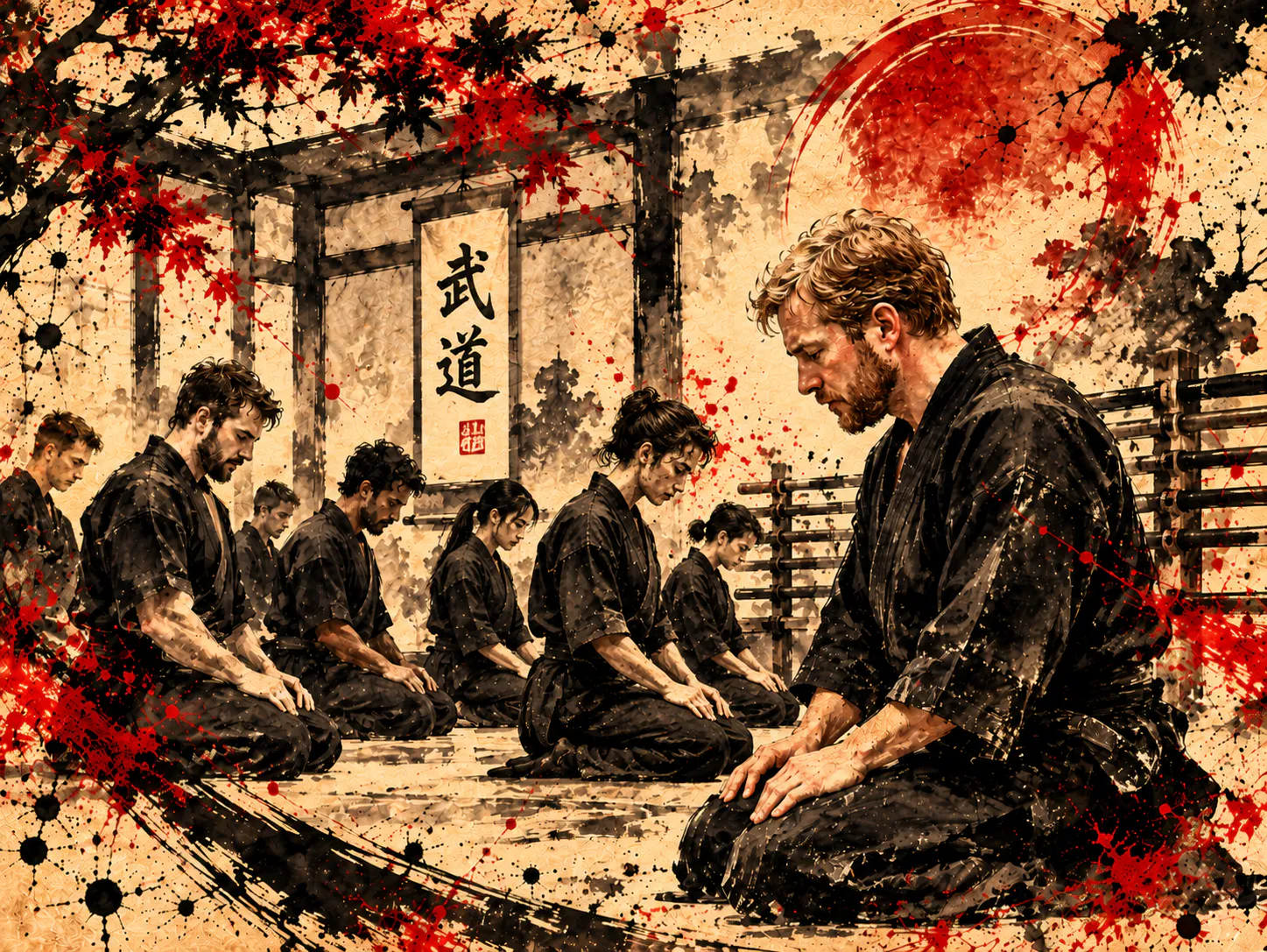
Martial artists kneel in formal practice inside an ink-wash dojo.

01 · Kihon · 基本

Fundamentals make inquiry possible

Kihon are foundational skills: posture, footwork, balance, striking actions, receiving skills, and basic technical relationships. Repetition is not the end of study. It gives students enough consistency to notice what changes and why.

02 · Kata · 形

A framework for investigation

Kata are structured forms practiced alone or with a partner. They preserve technical and tactical problems in a repeatable shape. Students examine distance, timing, position, targets, rhythm, intention, and the responsibilities of both roles before exploring variation.

03 · Keiko · 稽古

Study through practice

Keiko carries the sense of examining what has come before. Class introduces material through demonstration, correction, and partner work, but students must also reflect, repeat, and practice. Information becomes skill only through sustained effort.

04 · Ukemi · 受身

Receiving safely and intelligently

Ukemi is more than falling. It is the ability to receive force, protect the body, remain aware, and continue moving. Beginners develop these skills progressively so partner practice can become both safer and more honest.
Transmission & responsibility

Tradition lives through people

A teacher can demonstrate, explain, correct, and provide a method. The student must attend carefully, practice consistently, and test understanding without rushing past the fundamentals.

Controlled drills and variation help determine whether a principle remains useful when distance, timing, rhythm, or a partner’s response changes.

Great faith. Great doubt. Great effort.

Dōjō-kun & etiquette

Values made visible in conduct

The dōjō-kun (道場訓), or code of the dojo, emphasizes patience, justice, freedom from greed and obstinacy, an immovable heart, loyalty, and balance between literary and martial cultivation.

In daily practice, etiquette is practical: arrive ready to learn, listen, care for the training space, acknowledge teachers and partners, control your technique, and protect the people who make training possible.

Your first step

Learn about training

The clearest introduction to budō is a careful class with a knowledgeable teacher and attentive partners. Join the founding student list for introductory opportunities.

Join the Founding Student List