From the Instructor
Chasing Budō: A Lifelong Pursuit of Japanese Martial Arts
Robert Hartung reflects on thirty-three years of training, six years of research, and the teachers and ideas behind his forthcoming book, Chasing Budō.
What does it truly mean to practice budō? Is it the study of techniques, the preservation of tradition, the pursuit of personal development, or something more difficult to define?
These questions have accompanied me through more than thirty-three years of studying Japanese martial arts. They also became the foundation of my forthcoming book, Chasing Budō, a work that began during an unexpected interruption in my life as a martial arts practitioner and instructor.
What started as a pursuit to understand the meaning of budō developed into a six-year investigation into Japanese martial arts history, traditional methods of training, the development of skill, and the relationship between teachers and students.
In many ways, it became the book I had always wanted to read.
When the Dōjō Closed, Another Journey Began
In March 2020, the COVID-19 pandemic brought the sudden closure of my dojo. Like martial arts instructors around the world, I found myself unable to teach or train with others in the manner to which I had become accustomed.
Martial arts training is fundamentally experiential. Much of what we learn emerges through direct interaction with teachers and training partners. Losing that environment created an interruption in a practice that had occupied much of my life.
I continued practicing alone, but I also returned with renewed determination to another longstanding interest: the study of Japanese martial arts through historical and literary sources.
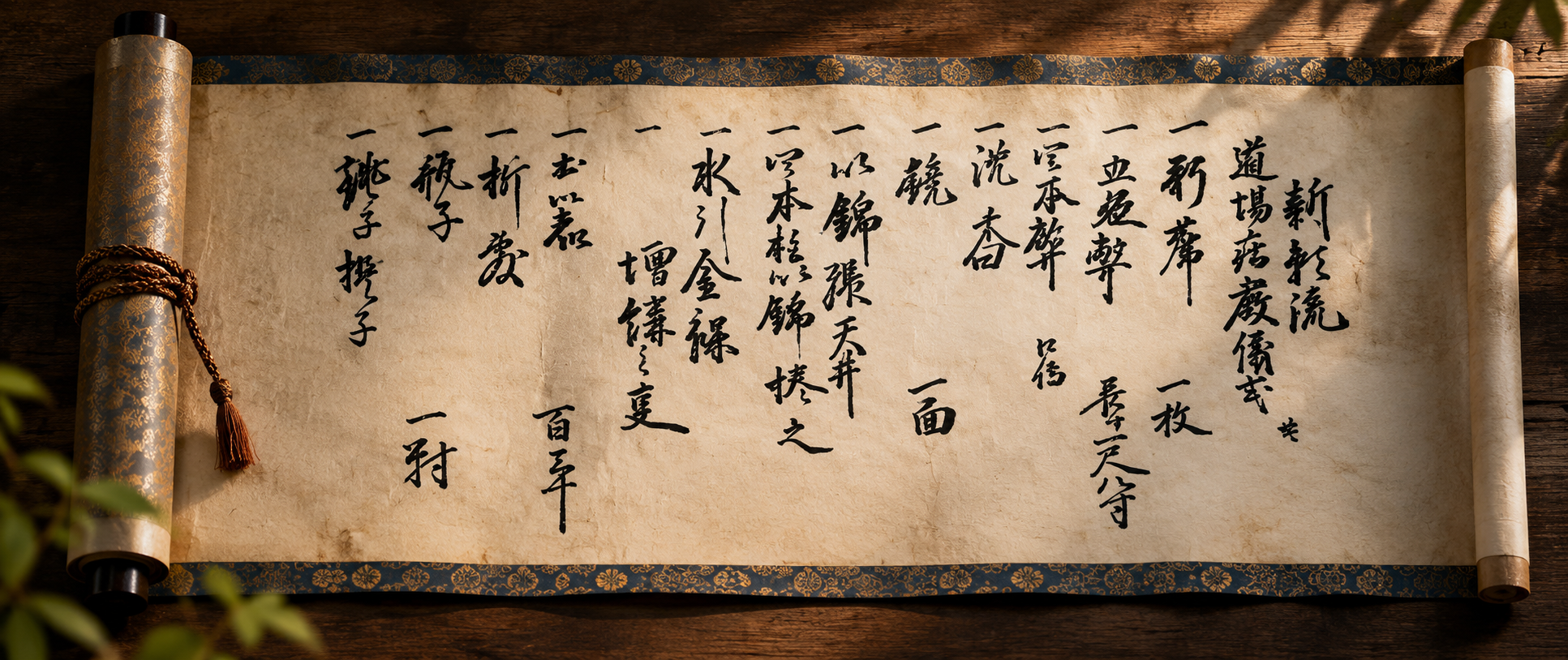
I began reading histories, examining traditional transmission documents known as 伝書 (densho), and studying treatises on swordsmanship, jūjutsu, and other Japanese martial traditions.
I wanted to understand not merely what earlier generations of martial artists practiced, but what they were attempting to cultivate through that practice.
Six years later, that investigation has developed into a nearly completed book.
The questions that began the journey have not disappeared. If anything, the research has revealed how much more remains to be understood.
文武両道 (Bunbu Ryōdō): The Pursuit of Martial and Intellectual Learning
One idea that has long influenced my approach to Japanese martial arts is 文武両道 (bunbu ryōdō), the pursuit of both literary or intellectual cultivation and martial practice.
These pursuits are sometimes treated as separate activities. One involves studying texts, history, and ideas; the other involves the physical development of skill.
Yet each can inform the other.
Historical research provides context for understanding why martial traditions developed particular techniques, terminology, and educational practices.
Physical training, meanwhile, provides an experiential perspective that cannot be acquired through reading alone.
A person may understand the written explanation of a technique without possessing the ability to perform it. Likewise, a practitioner may become technically proficient while knowing little about the historical circumstances that shaped the tradition being studied.
I have never considered these pursuits mutually exclusive.
For me, the pursuit of bunbu ryōdō involves bringing historical investigation and physical practice into conversation with one another.
Chasing Budō grew from that relationship.
Looking Beyond the Familiar Stories of Japanese Budō
As my research progressed, I became increasingly aware of the difficulty of writing a comprehensive account of Japanese martial arts.
Japanese martial traditions developed across centuries of political, social, religious, and cultural change. Their terminology, purposes, and methods were not necessarily consistent from one period to another.
Concepts appearing in Edo-period martial treatises may not have carried precisely the same meanings that modern practitioners attach to them.
Historical documents present additional difficulties. Changes in written Japanese, specialized vocabulary, regional traditions, and the assumptions of earlier generations complicate interpretation.
The modernization of Japanese martial arts also cannot be separated from the transformations associated with the Meiji period, the changing relationship between martial practice and education, and the later development of modern budō.
Religious and philosophical influences present further challenges. Ideas associated with Buddhism, Shintō, Confucian thought, and other traditions are not always easily understood when removed from their historical settings.
One recurring problem I encountered was the tendency for assumptions about Japanese martial arts to be repeated until they became accepted explanations.
A familiar story is not necessarily an accurate one.
This is one reason I wanted to examine older documents and historical context rather than relying exclusively on modern interpretations.
There are worthwhile English-language works on Japanese martial arts, but I frequently found myself searching for deeper examinations of the historical evidence and the actual process of developing martial skill.
I gradually realized that the book I wanted to read was one I would have to attempt to write myself.
I also discovered why such a project is so difficult.
After Thirty-Three Years, the Most Important Part of My Training Was the Teachers
Having recently turned fifty, I find myself reflecting more frequently on the passage of time.
A well-known passage from the Japanese performing tradition of Atsumori reflects upon the brevity of human life, comparing our fleeting existence to a dream.
The sentiment becomes more meaningful as the years pass.
Thirty-three years of martial arts training may sound like a long time, yet it has passed remarkably quickly.
When I look back upon those years, the most important part of my experience is not the number of techniques I learned, the names of the 流派 (ryūha) I studied, or the ranks I attained.
What matters most is the people from whom I sought instruction.
I have been fortunate to encounter teachers whose understanding and abilities profoundly influenced my approach to Japanese martial arts.
Their importance extended far beyond the techniques they demonstrated.
A capable teacher can change how a student observes movement, recognizes mistakes, understands principles, and approaches the process of learning.
The quality of instruction can determine whether a student develops meaningful understanding or simply learns to imitate the outward appearance of techniques.
If I could offer one suggestion to someone beginning the pursuit of Japanese budō, it would be this:
Choose your teachers carefully. The people from whom you learn may matter more than the name of the martial art they teach.
This is not an argument that traditions are unimportant. Their teachings, methods, and histories certainly matter.
But a tradition is encountered through people, and the understanding of those people influences what a student ultimately receives.
以心伝心 (Ishin Denshin): Why Direct Instruction Still Matters
Traditional Japanese martial arts frequently involve forms of knowledge that are difficult to communicate through language alone.
One expression relevant to this relationship is 以心伝心 (ishin denshin), commonly understood as transmission from mind to mind or heart to heart.
Within martial arts training, this offers a useful way of considering the relationship between direct instruction and personal understanding.
An instructor may demonstrate a technique repeatedly, explain its important principles, and provide careful correction.
Yet the student must eventually develop the ability to recognize and reproduce those principles through their own experience.
Knowing the explanation of balance is not the same as having developed balance.
Understanding a description of timing does not necessarily provide the ability to recognize the appropriate moment to move.
This is why the direct relationship between teacher and student remains so important in the transmission of martial arts.
Books, videos, and digital resources can contribute substantially to learning and research.
However, they cannot fully replace the experience of observing a teacher, practicing with another person, receiving correction, and gradually developing skill.
The pursuit of budō requires more than the accumulation of information.
It requires practice.
The Teacher Plants the Seeds. The Student Must Cultivate Them.
One metaphor became especially important to me during the writing of Chasing Budō: the relationship between a teacher, a student, and a garden.
Teachers plant seeds in their students.
Those seeds take the form of instruction, correction, demonstrations, principles, and ways of approaching practice.
The quality of the seeds matters.
Poor instruction can establish habits and misunderstandings that become increasingly difficult to correct. A faulty foundation may influence years of subsequent training.
Good instruction, however, does not guarantee that understanding will develop.
The student must cultivate what has been received.
Without continued practice, attention, and thoughtful effort, even excellent instruction may produce little lasting growth.
Consider a garden planted with the finest seeds. Without appropriate care, those seeds may never reach their potential.
Martial arts training is much the same.
In Japanese martial arts, the term 稽古 (keiko) refers to practice or training.
But meaningful practice is not merely the repetition of familiar movements.
It requires observation, correction, and a willingness to investigate what we do not yet understand.
The Japanese concept of 工夫 (kufū) concerns thoughtful effort and investigation.
自得 (jitoku) refers to understanding personally acquired through experience.
These ideas illustrate an essential relationship: the teacher can guide the student, but the student must ultimately undertake the work of learning.
A gardener cannot simply plant a seed and assume the work is finished.
Neither can a martial artist.
The practice must be continually tended and cultivated.
What Is Chasing Budō About?
Chasing Budō is a forthcoming book examining the history, practice, and transmission of Japanese martial arts.
Its central concern is not simply what techniques martial artists practiced, but how they developed skill and what they sought through that practice.
The book explores subjects including the historical development of Japanese budō, the martial 流派 (ryūha), the role of the 道場 (dōjō), traditional teaching methods, and the preservation of martial knowledge.
It also investigates the process through which students develop understanding.
Concepts such as 守破離 (shuhari), 見取り稽古 (mitori geiko), 修行 (shugyō), and 以心伝心 (ishin denshin) offer different perspectives on learning, practice, and transmission.
Historical documents and the ideas of earlier martial artists provide the foundation for examining these subjects.
The objective is not to present a romanticized picture of Japanese martial traditions or to suggest that every historical question has a simple answer.
It is to encourage more careful investigation, thoughtful practice, and a deeper appreciation of the complexity of Japanese martial arts.
Above all, I hope the book inspires readers to continue their own pursuit of budō.
Readers interested in the research behind the book can explore Chasing Budō , where I share articles, translations, and research relating to Japanese martial arts history and practice.
Bringing the Pursuit of Budō to Fox Valley Budō Kai
The ideas explored in Chasing Budō are not separate from how I approach teaching martial arts.
They are closely connected with the instructional philosophy of Fox Valley Budō Kai in South Elgin, Illinois.
Our planned primary program is Bujinkan Budō Taijutsu, through which students study movement, posture, balance, distance, timing, and the principles underlying martial techniques.
The purpose of instruction is not merely to teach students to reproduce techniques.
It is to help them gradually develop the understanding and physical skill necessary to perform those movements more effectively.
Classes incorporate demonstration, observation, foundational movement, partner practice, and individual correction.
Students are encouraged to investigate what they are learning rather than simply memorize a sequence of movements.
We welcome beginners and experienced practitioners ages fifteen and older.
Opening is planned for early 2027, with classes planned at South Elgin Budokan for students from South Elgin, Elgin, St. Charles, Bartlett, and surrounding Fox Valley communities. See our planned schedule and enrollment information and confirm the location before attending.
For those interested in traditional Japanese martial arts, the dojo offers an opportunity to experience many of the principles discussed in the book through direct practice.
Chasing Budō Is a Never-Ending Pursuit
When I began writing Chasing Budō, I hoped to discover a clearer understanding of what it means to practice Japanese martial arts.
Six years of research have not produced a simple answer.
Instead, they have reinforced something I have gradually come to appreciate throughout my thirty-three years of training.
Budō is not merely a destination to be reached.
It is a pursuit that requires continued attention, practice, and refinement.
Teachers provide guidance and plant the seeds of understanding.
Students must cultivate those seeds through their own effort.
And even after many years, the garden still requires care.
My hope is that Chasing Budō contributes something meaningful to that cultivation.
Not by providing a final answer to every question, but by encouraging readers and practitioners to examine more carefully, practice more thoughtfully, and continue their own pursuit of understanding.
The pursuit of budō does not end when we acquire a technique, a rank, or a certificate. It continues for as long as we are willing to learn.