New Students
Starting Martial Arts as an Adult in South Elgin, Illinois
New to martial arts? Explore age, fitness, first classes, and traditional Bujinkan training for adult beginners in South Elgin, Illinois.
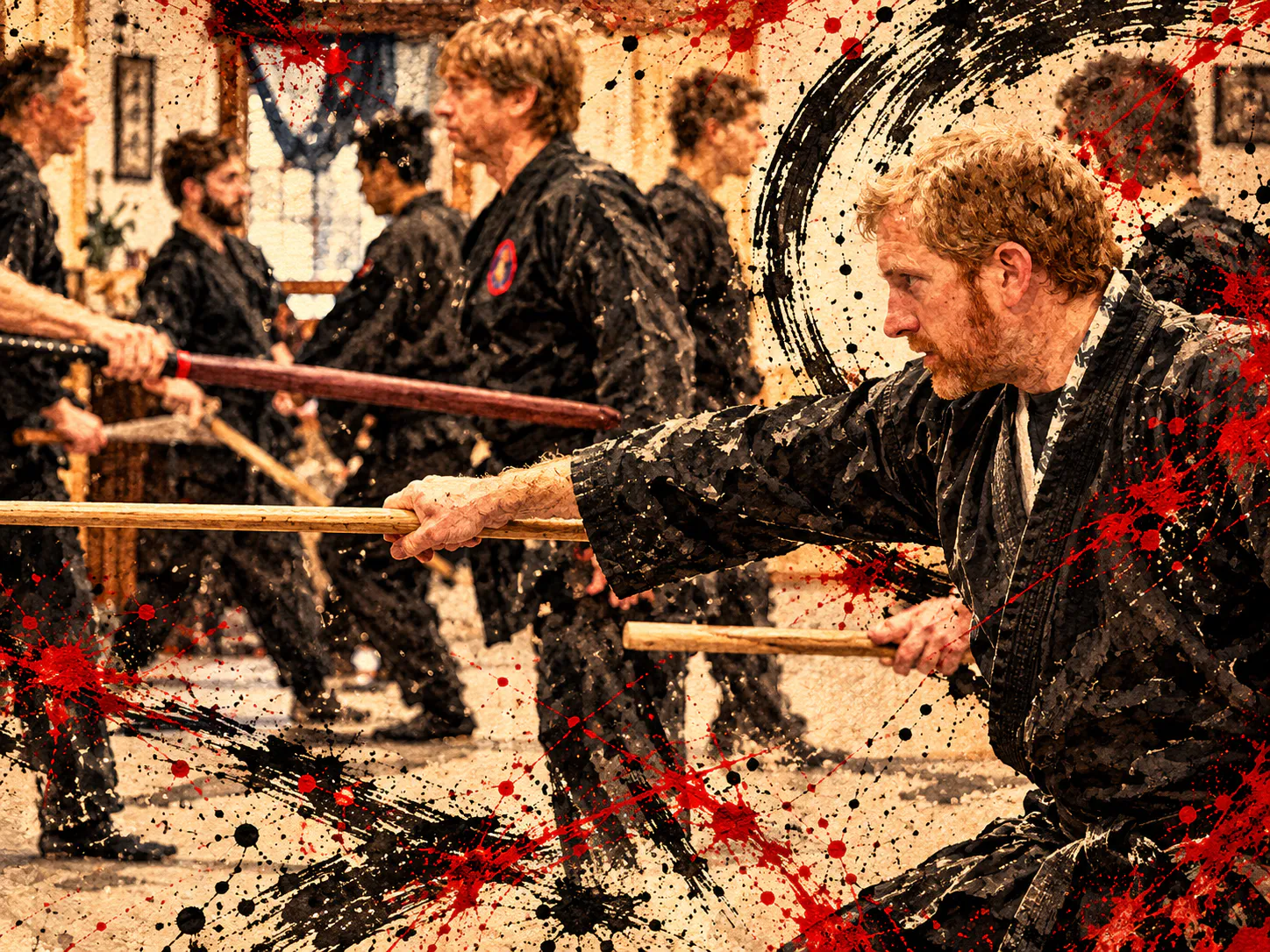
Have you considered learning martial arts but wondered whether you were too old, too out of shape, or too inexperienced to begin? Many adults hesitate to take that first step. Everyone who practices martial arts was once a beginner.
At Fox Valley Budō Kai in South Elgin, Illinois, our approach to traditional Japanese martial arts centers on movement, balance, timing, and thoughtful practice. This guide explains what adult beginners can expect as they start learning.
Am I Too Old to Begin Martial Arts?
One of the most common misconceptions about martial arts is that training must begin during childhood to be worthwhile. Although beginning at a young age has its advantages, adults bring their own strengths to the learning process, including patience, life experience, discipline, and an ability to approach practice thoughtfully.
Adults can begin learning at different ages. The starting point is a willingness to learn, an honest understanding of your current abilities, and practice suited to the individual.
Traditional Japanese martial arts are not solely concerned with physical strength, speed, or athleticism. Much of the training involves learning to move more efficiently, recognize balance and distance, and gradually refine techniques through repeated practice.
Progress is individual. A new student should not expect to perform like someone who has trained for many years. Instead, the objective is to improve through appropriate instruction, practice, and experience.
Do I Need to Be in Shape Before Starting?
You do not need to be an accomplished athlete to begin learning martial arts. In fact, waiting until you believe you are sufficiently fit can become an unnecessary obstacle.
Martial arts training can involve coordination, mobility, balance, physical conditioning, and unfamiliar movement patterns. These abilities are developed progressively rather than expected from the beginning.
Your first objective is not to move faster or harder than everyone else. It is to understand what you are doing, recognize your current abilities, and gradually learn to control your body more effectively.
Students should communicate any injuries or physical limitations to the instructor so that appropriate participation can be discussed. Martial arts training should be challenging, but training intensity and progression should be suited to the individual.
What Makes Traditional Japanese Martial Arts Different?
There are many approaches to martial arts, from competitive combat sports to modern self-defense programs and traditional systems of Japanese martial training. Each has its own methods and objectives.
At Fox Valley Budō Kai, our planned primary program is Bujinkan Budō Taijutsu, which draws upon several Japanese martial traditions and includes methods of unarmed movement, striking, controlling, throwing, and weapon-related training.
Rather than concentrating exclusively on physical techniques, we also examine the principles that make those techniques function.
These include positioning, balance, timing, distance, and the ability to move without unnecessary effort. Students learn not only what a particular movement looks like but also why it is performed and what makes it effective.
Learning to Use Less Strength: The Principle of Datsuryoku
A particularly interesting aspect of Japanese martial arts training is the study of 脱力 (datsuryoku), commonly translated as relaxation or the release of unnecessary muscular tension.
Beginners often attempt to perform unfamiliar movements through excessive strength. When something is difficult, the natural response may be to try harder, move faster, or apply more force.
However, additional effort does not necessarily produce better movement.
Developing skill involves recognizing which muscles and movements are necessary and which may be interfering with the action. This does not mean becoming weak or completely relaxed. It means learning to apply effort appropriately.
For adult beginners, this can be an important shift in perspective. Martial arts practice is not simply about becoming stronger; it is also about becoming more capable of using the strength and movement you already possess.
Why Progress Takes Time
In Japanese martial arts, the term 稽古 (keiko) refers to practice or training. Yet good practice is more than simply repeating the same movements.
Imagine learning to play a musical instrument. Repeating a passage incorrectly hundreds of times does not necessarily make you a better musician. Improvement requires observation, correction, understanding, and continued effort.
Martial arts are similar. Students must learn to recognize their mistakes, understand instruction, and gradually develop the ability to correct themselves.
One traditional concept associated with stages of learning is 守破離 (shuhari), often explained through three broad ideas:
- Shu (守): Learning and preserving the fundamental forms and methods taught by the instructor.
- Ha (破): Deepening understanding, exploring principles, and moving beyond a purely mechanical imitation of the forms.
- Ri (離): Developing an integrated understanding in which skill can be expressed more freely.
These stages should not be understood as rigid milestones that every student reaches on a fixed schedule. They offer a useful way of thinking about the long-term development of skill.
For a beginner, the most important task is simply to establish a good foundation. There is no need to rush.
What Should You Expect During Your First Class?
Beginning something unfamiliar can feel intimidating, particularly when you are entering an established group of students. However, new students are not expected to understand Japanese martial arts terminology, etiquette, or techniques before they arrive.
An introductory experience may include an explanation of dojo etiquette, fundamental movement, basic positioning, and supervised practice with a partner.
Depending on the lesson and your readiness, you may be introduced to concepts such as:
- Basic posture and movement
- Balance and coordination
- Distance and positioning
- Safe movement and partner practice
- Fundamental principles of Bujinkan Budō Taijutsu
You are not expected to remember everything immediately. Learning martial arts is a cumulative process, and unfamiliar movements gradually become more understandable through practice.
Your first class is an opportunity to experience the training environment, meet the instructor, ask questions, and decide whether this is something you would like to pursue. For a practical introduction, read what to expect in your first class.
More Than Just Learning Techniques
One of the deeper ideas within Japanese budō is that practice involves more than acquiring a collection of techniques.
Students gradually develop observation, coordination, adaptability, patience, and an understanding of their own movement. Through continued training, they also encounter situations in which a familiar approach no longer works and must learn to adjust.
In this sense, martial arts training becomes a process of continuing education. There is always something to refine, something to reconsider, and something new to discover.
The value of training is not limited to a rank, a certificate, or the number of techniques learned. It also lies in the skill cultivated through sustained and thoughtful practice.
Finding Adult Martial Arts Classes in the Fox Valley
If you live in South Elgin, Elgin, St. Charles, Bartlett, or the surrounding Fox Valley area, finding a convenient place to train is an important part of beginning martial arts.
When choosing a dojo, consider more than simply the name of the martial art being taught. Look at the instructor's background, the training environment, the approach to beginner instruction, and whether the schedule fits your life.
You should also consider what you want from training. Some people are interested in competition, others in physical activity or self-defense, while still others are attracted to the history, principles, and continued study of traditional martial arts.
Fox Valley Budō Kai is preparing for a planned early-2027 opening in South Elgin, with Bujinkan Budō Taijutsu classes intended for teens and adults ages 15 and older. See our planned schedule and enrollment information for current details.
The First Step Is Simply to Begin
You do not need to understand Japanese martial arts before entering a dojo. You do not need years of experience, exceptional strength, or perfect coordination.
What you need is curiosity, a willingness to learn, and the patience to recognize that meaningful skill develops through time and practice.
Whether you are beginning at twenty, thirty, forty, or later, your first class is simply the beginning of that process.