New Students
How to Choose a Martial Arts Dojo in the Fox Valley
Choosing a dojo in the Fox Valley? Learn what to ask about instructors, beginner classes, safety, schedules, and traditional martial arts.
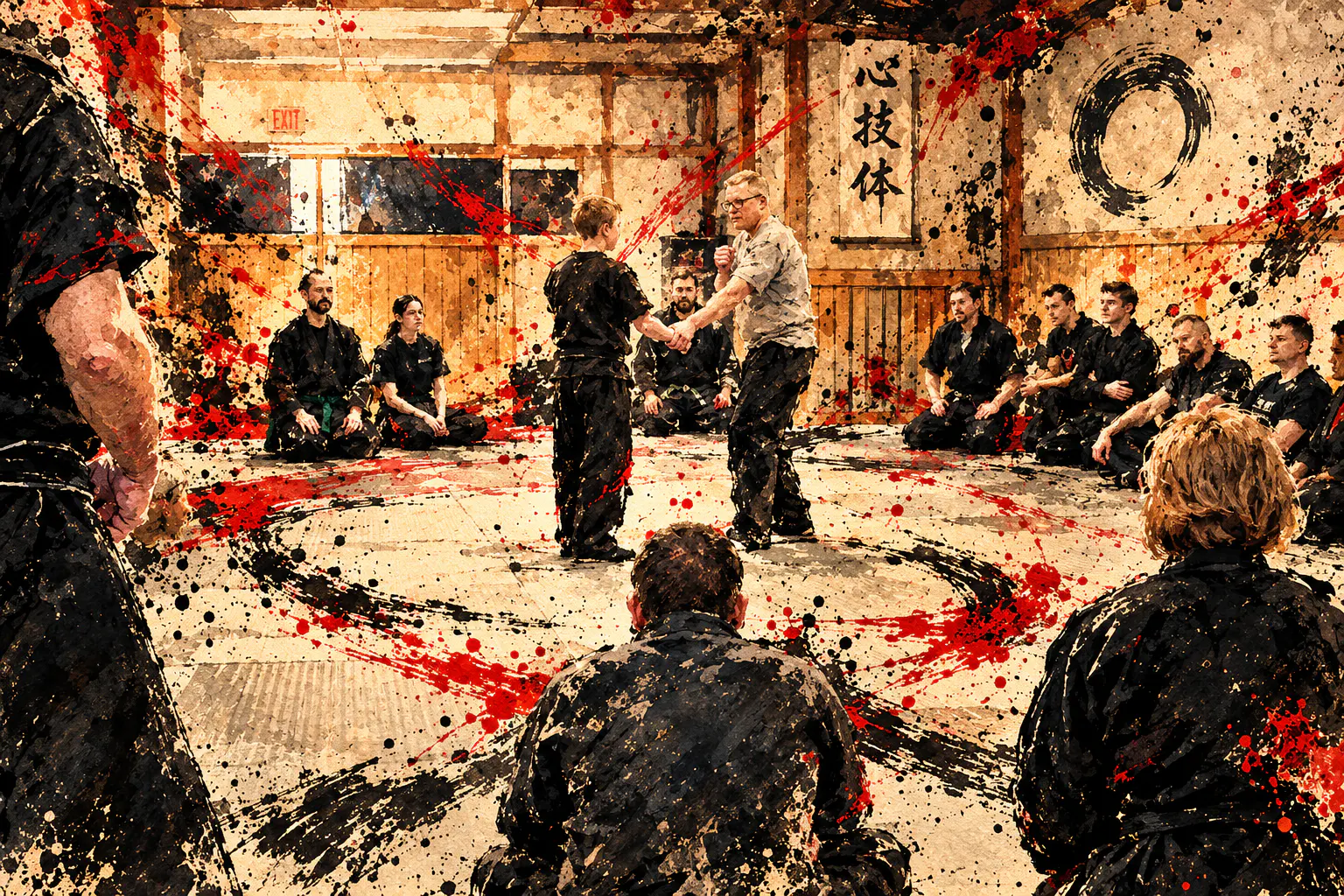
Choosing a martial arts school is an important decision, whether you are beginning your training as an adult, returning after years away, or looking for a place where your teenager can learn. With martial arts programs available throughout Elgin, South Elgin, St. Charles, Bartlett, and the surrounding Fox Valley area, how do you decide which dojo is right for you?
The answer involves more than choosing a martial art or finding the nearest school. The quality of instruction, the learning environment, the training methods, and the relationship between teacher and student can all have a lasting influence on your experience.
Here are some important considerations when choosing a martial arts dojo, particularly if you are interested in traditional Japanese martial arts.
1. First, Consider Why You Want to Train
Before visiting a martial arts school, consider what interests you about training. People begin martial arts for many different reasons, and not every school emphasizes the same objectives.
Some students are interested in competitive fighting, physical conditioning, or practical self-defense. Others seek a challenging activity, an opportunity for personal development, or an introduction to traditional Japanese martial arts.
None of these motivations is inherently better than another, but they can lead you toward different training environments.
For example, someone primarily interested in competitive grappling may prefer a Brazilian jiu-jitsu school. Someone interested in striking competition might prefer boxing, kickboxing, or another combat sport.
Traditional Japanese martial arts often provide a different emphasis. Students may explore historical forms of practice, body mechanics, timing, distance, balance, and the principles underlying martial techniques.
Understanding your own interests will help you find a school whose approach to training matches what you hope to learn.
2. Look Beyond Rank and Examine the Instructor
The instructor is one of the most important factors in choosing a dojo. Martial arts instruction involves more than demonstrating techniques. A capable teacher must also recognize mistakes, communicate ideas, structure practice, and guide students through their individual development.
Rank, certifications, and lineage can provide useful information about an instructor's background, particularly within traditional Japanese martial arts. However, they should not be your only considerations.
Observe how the instructor works with students. Can they explain why a movement works? Do they recognize when a beginner is struggling? Are corrections specific and understandable? Do advanced students demonstrate good fundamentals?
A good instructor should be able to adapt explanations to the student's current understanding without abandoning the principles of the art.
You should also feel comfortable asking questions about the instructor's training history, teaching experience, and approach to martial arts. You can read about our instructor and teaching approach before contacting us.
3. Understand the Difference Between Learning Techniques and Developing Skill
One of the most important distinctions in martial arts education is the difference between learning a technique and developing the ability to perform it skillfully.
A student might memorize dozens of movements without understanding the principles that make them function. Knowing the sequence of a technique is not necessarily the same as understanding its timing, distance, balance, or appropriate application.
In Japanese martial arts, practice is commonly called 稽古 (keiko). Meaningful practice involves more than repetition. It requires attention, correction, experimentation within appropriate boundaries, and the gradual development of understanding.
When visiting a dojo, observe whether students are encouraged to develop these qualities. Are they simply copying movements, or are they learning to recognize what makes a movement successful?
Consider whether the school emphasizes immediate advancement or the development of lasting skill. There is nothing wrong with having goals and milestones, but progress should be supported by genuine improvement.
4. Observe the Training Environment
A dojo is more than a physical location where martial arts are practiced. The Japanese word 道場 (dōjō) commonly refers to a place of practice or training, but the learning environment is shaped as much by the people within it as by the building.
When visiting a martial arts school in the Fox Valley, pay attention to the atmosphere.
- Are new students welcomed and given appropriate guidance?
- Do experienced students help beginners learn?
- Is the instructor attentive to safety and individual ability?
- Do students treat their training partners with respect?
- Is the training serious without becoming unnecessarily intimidating?
- Are mistakes treated as opportunities for learning?
Martial arts training can be physically and mentally challenging. An environment that encourages students to work carefully, ask questions, and improve through practice is important for long-term development.
The atmosphere should reflect the kind of training culture you want to participate in regularly.
5. Find Out How Beginners Are Taught
If you are beginning martial arts for the first time, you may wonder whether you will be able to keep up with more experienced students.
A well-structured learning environment should recognize that beginners have different needs from advanced practitioners.
New students must gradually become familiar with basic postures, movement, coordination, terminology, and training etiquette. Even simple movements may initially feel unfamiliar.
Traditional Japanese martial arts frequently use 形 (kata), or prescribed forms, as an important means of instruction. These provide a structure through which students can study techniques and underlying principles.
Early practice may emphasize correct positioning and the broad structure of movement. As students become more experienced, they can begin to recognize subtler aspects of distance, timing, balance, and movement efficiency.
Ask how beginners are introduced to the curriculum and what a typical first month of training involves.
A prospective student should not need extensive prior experience to understand how they can begin. Our guide to starting martial arts as an adult addresses common questions about age, fitness, and learning.
6. Watch How Students Learn from One Another
One distinctive feature of traditional martial arts education is the importance of learning through direct observation.
In Japanese, 見取り稽古 (mitori geiko) refers to learning through watching and observing practice.
Students can learn a great deal by carefully observing an instructor's movement, how experienced practitioners respond to correction, and how different people approach the same exercise.
Learning to observe is itself a skill. Beginners may initially notice only the most obvious movements. Over time, they may become more attentive to subtle changes in posture, distance, timing, and the use of the body.
When visiting a dojo, watch the students as closely as the instructor. Their behavior often reveals the quality of the learning culture.
Do advanced students demonstrate patience? Are students attentive during demonstrations? Is partner practice cooperative when learning a new skill, with appropriate resistance introduced according to the lesson's purpose?
These are useful indicators of how the school approaches the development of skill.
7. Consider the Training Methods and Safety
Martial arts vary considerably in how they train. Some schools emphasize competition and sparring, while others primarily use structured partner exercises, kata, technical drills, or combinations of these methods.
Ask what types of training are included and how intensity is adjusted for different students.
Martial arts involve physical contact and some degree of risk. Students should understand how partners are expected to work together, what safety precautions are used, and how the instructor supervises potentially hazardous techniques.
A good learning environment should distinguish between practicing a movement carefully and testing that movement under greater resistance.
Neither speed nor intensity alone establishes the quality of training. What matters is whether the methods are appropriate to the skills being developed and the abilities of the students involved.
8. Choose a Dojo You Can Attend Consistently
One practical consideration is often overlooked: can you realistically attend classes on a regular basis?
Martial arts skills develop through continued practice. Even excellent instruction has limited value if your schedule prevents you from attending.
If you live in South Elgin, Elgin, St. Charles, Bartlett, Geneva, or another nearby Fox Valley community, consider the travel distance, class times, and training frequency.
Ask about tuition, equipment requirements, membership commitments, and any additional costs before enrolling.
A dojo should fit into your life well enough that training can become a sustainable practice rather than a short-lived activity.
9. Take an Introductory Class Before Deciding
Websites, photographs, and descriptions can tell you quite a bit about a martial arts school, but they cannot fully communicate the experience of training there.
Whenever possible, visit a dojo, observe a class, or participate in an introductory lesson. Read what to expect in your first martial arts class to help prepare for a visit.
Notice how the instructor communicates and how students interact. Consider whether the pace of instruction allows you to understand the lesson and whether the training interests you enough to return.
You do not need to decide immediately whether you want to spend years studying a martial art. Initially, you only need to determine whether the training environment is one where you would like to begin learning.
Traditional Japanese Martial Arts at Fox Valley Budō Kai
Fox Valley Budō Kai is preparing for a planned early-2027 opening in South Elgin, Illinois, with Bujinkan Budō Taijutsu instruction intended for teens and adults ages 15 and older.
Our approach emphasizes the development of skill through continued practice, careful observation, correction, and the study of fundamental martial principles.
Training explores movement, posture, distance, timing, balance, and the appropriate use of strength. Students work toward understanding not only the outward appearance of a technique, but the principles that make it function.
We view martial arts education as a continuing process. Beginners establish foundations, while experienced students continue refining their understanding. Regardless of experience, there is always more to learn.
Our planned program is intended for students from South Elgin, Elgin, St. Charles, and the surrounding Fox Valley area. See the planned schedule and enrollment information for current details.
Making Your Decision
Ultimately, the best martial arts dojo is not necessarily the largest, the most decorated, or the one advertising the quickest path to advancement.
It is a school that offers instruction suited to your goals, a training environment where you can learn effectively, and a practice you can continue with genuine interest.
Take time to visit, ask questions, and observe. Whether you choose traditional Japanese martial arts, a competitive combat sport, or another discipline, finding the right teacher and learning environment can make a meaningful difference in your progress.
Martial arts are learned through practice. Choosing the right place to begin is the first step.