Training Principles
Why Martial Arts Training Is a Lifelong Process
Explore lifelong martial arts practice through shugyō, shūyō, and shuhari, and learn why fundamentals remain important at every stage of training.
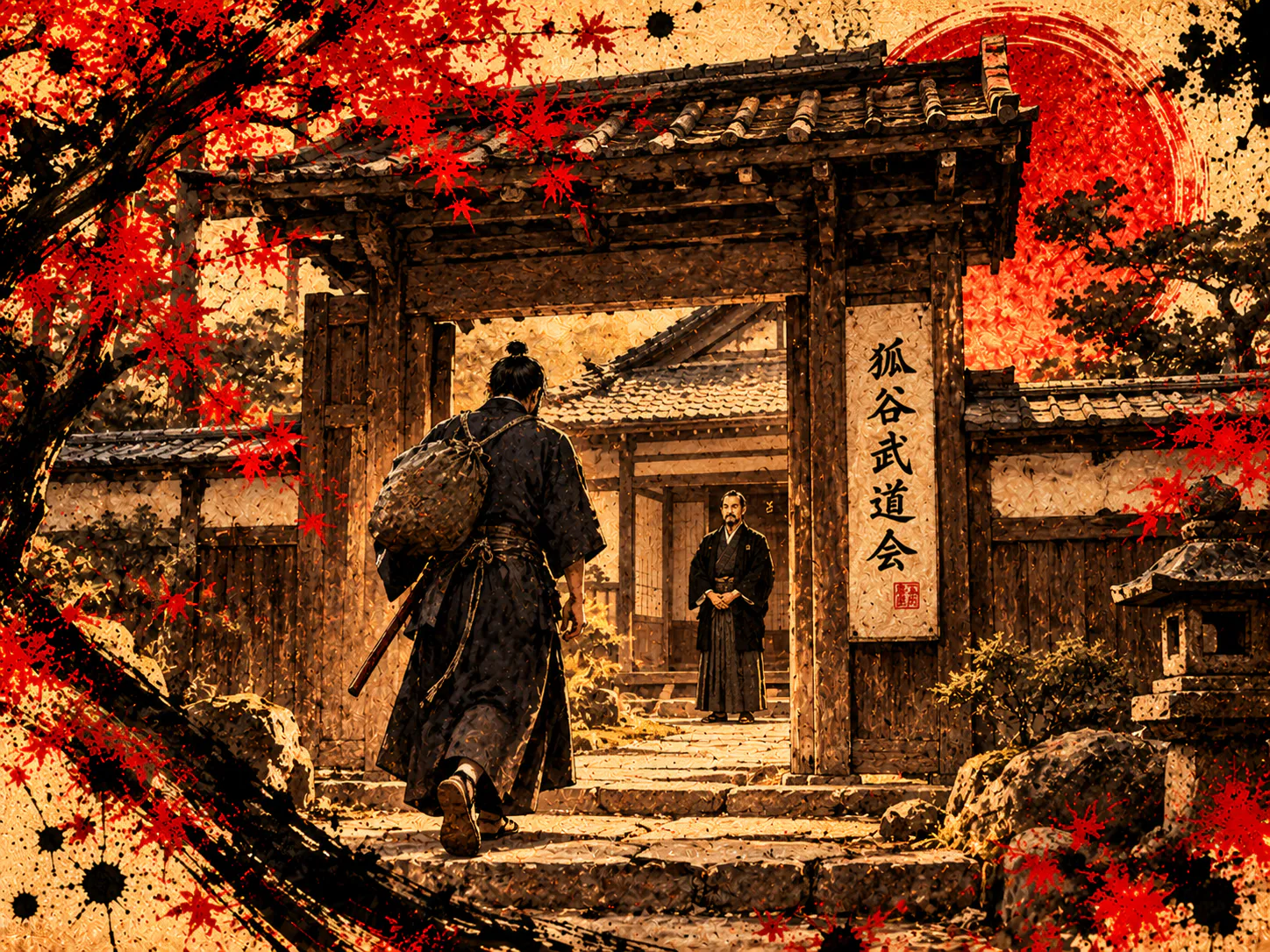
When people begin studying martial arts, they often imagine progress as a series of accomplishments: learning techniques, earning ranks, and eventually reaching a point called mastery. Yet one of the defining characteristics of traditional Japanese budō is that training does not necessarily have a final destination.
The longer a person practices, the more they may recognize how much remains to be learned. What initially appears to be a simple movement can gradually reveal questions about balance, timing, distance, coordination, and the use of the body.
In this sense, martial arts are not simply something we learn. They become something we continue to practice, examine, and refine throughout our lives.
Learning a Martial Art Is Not the Same as Mastering It
A beginner often measures progress through visible accomplishments. They learn a new movement, remember a sequence of techniques, or become more comfortable with a training partner.
These are meaningful developments. However, the ability to reproduce a technique is not necessarily the same as possessing a deep understanding of it.
A student may learn the outward form of a technique relatively quickly, yet spend years investigating its underlying principles. Changes in timing, posture, balance, or distance can alter how the same movement functions.
With experience, students may begin noticing details they previously overlooked. They discover that what once seemed correct may have been incomplete, inefficient, or dependent on circumstances they did not fully understand.
This is not necessarily a sign of failure. It can be evidence that their ability to observe and evaluate movement has become more refined.
Skill development is therefore not always a straightforward progression from ignorance to knowledge. It often involves repeatedly returning to familiar material with a deeper understanding.
修行 (Shugyō): The Discipline of Continued Practice
In Japanese martial traditions, the term 修行 (shugyō) is frequently associated with sustained, disciplined training or the rigorous pursuit of a practice.
Although the term has broader religious and historical associations, within martial arts it can describe a commitment to training that extends beyond casual participation.
Shugyō involves more than simply attending classes. It requires an ongoing willingness to confront difficulties, recognize weaknesses, and continue practicing when progress becomes less obvious.
Early improvements can be encouraging. A beginner may quickly learn fundamental postures or become more comfortable performing unfamiliar movements.
Over time, however, progress may become more difficult to recognize. Improvements might involve small adjustments in timing, subtle changes in balance, or a better understanding of how to move without unnecessary tension.
These developments may not be immediately visible to an outside observer, but they can be important to the practitioner.
The discipline of shugyō encourages continued effort even when improvement is gradual, uncertain, or difficult to measure.
This does not mean training must be excessively harsh or that students should ignore injury or exhaustion. Meaningful discipline also requires judgment, patience, and the ability to practice appropriately.
修養 (Shūyō): Cultivating the Individual Through Practice
Closely related to the idea of disciplined training is 修養 (shūyō), a Japanese term associated with self-cultivation, education, and the development of personal character.
Unlike the physical and technical demands often associated with shugyō, shūyō emphasizes the broader cultivation of the individual.
Within martial arts practice, this might involve developing patience, attentiveness, self-discipline, responsibility, or a more thoughtful approach to learning.
However, such qualities do not appear automatically simply because someone participates in martial arts.
A person may train for many years without developing humility or sound judgment. Technical ability does not, by itself, establish good character.
Personal cultivation requires deliberate attention to how one practices, interacts with others, responds to correction, and approaches difficulties.
A student who learns to accept correction without defensiveness, work responsibly with training partners, and recognize the limitations of their own understanding may cultivate habits that extend beyond the dojo.
In this sense, martial arts can provide opportunities for self-cultivation, but the responsibility for that development remains with the individual.
守破離 (Shuhari): Understanding the Development of Skill
One useful framework for considering long-term skill development is 守破離 (shuhari).
Often discussed in relation to Japanese traditional arts, shuhari describes a progression in the relationship between a student, their teacher, and the methods they practice.
Although interpretations vary, the three characters are commonly explained in the following way:
守 (Shu): Learning and Preserving the Form
During the initial stage, the student focuses on learning the established methods of the tradition.
They imitate the instructor, practice fundamental movements, and work toward reproducing the forms accurately.
At this stage, creativity is not necessarily the primary objective. Students first require a reliable foundation upon which further understanding can develop.
破 (Ha): Deepening and Examining Understanding
As experience grows, students begin recognizing the principles underlying the forms.
They become more capable of understanding why techniques are performed in particular ways and how changes in timing, distance, or circumstance influence their application.
The student moves beyond imitation toward a more informed understanding of the tradition.
離 (Ri): Skill Beyond Conscious Imitation
At a more advanced level, the practitioner may develop an integrated understanding that allows movement to emerge without consciously reproducing each individual step.
This does not necessarily mean abandoning the tradition or rejecting its fundamental principles.
Rather, the practitioner's understanding has become sufficiently developed that the principles can be expressed with greater freedom.
It is important not to interpret shuhari as a rigid ranking system or a fixed timetable for advancement.
A practitioner may demonstrate advanced understanding in one aspect of training while still needing fundamental instruction in another.
Even experienced martial artists continually return to basics. In practice, the development of skill is often more complex than a simple sequence of three stages.
Why Experienced Students Return to the Fundamentals
One of the more interesting characteristics of martial arts training is that experienced practitioners often spend considerable time studying movements that beginners are also learning.
The difference lies not necessarily in the movement itself, but in what the practitioner is able to perceive and understand.
A beginner studying a basic movement may concentrate on remembering where to place their feet or how to move their arms.
An experienced student might study the same movement while examining balance, the relationship between different parts of the body, the direction of force, or the precise timing of an action.
Both students may appear to be practicing the same exercise, yet their learning objectives can be very different.
As understanding develops, familiar techniques become opportunities for investigating increasingly subtle principles.
This is one reason the fundamentals never truly disappear from meaningful martial arts practice. Read Why We Practice Kata for another perspective on returning to familiar forms.
The Relationship Between Keiko, Kufū, and Jitoku
The long-term development of martial skill also involves several related concepts found in Japanese discussions of learning and practice.
稽古 (keiko) refers to practice or training. It provides the setting in which students repeatedly encounter and investigate the material they study.
工夫 (kufū) involves thoughtful effort, devising ways to address difficulties, and discovering how to improve through personal investigation.
自得 (jitoku) refers to understanding personally acquired or realized through one's own experience.
These ideas help explain why instruction alone does not produce skill.
A teacher can demonstrate a movement, describe its important features, and correct a student's mistakes.
Yet the student must ultimately develop the ability to perform the movement through continued practice.
Knowing an explanation is not the same as possessing the ability to carry it out.
This process of learning, investigating, and personally acquiring skill continues throughout a practitioner's life. Our earlier essay, 学習 — Learning, explores the distinction between receiving information and embodying understanding.
Why Progress Is Not Always Linear
Beginners sometimes expect improvement to follow a predictable path: each month should bring a new technique, a higher level of ability, or another advancement.
Actual skill development is rarely so consistent.
Some aspects of training may improve rapidly, while others remain difficult for extended periods.
A student may discover that a technique they previously performed comfortably becomes more challenging after receiving a correction.
This may occur because they are attempting to replace an established habit with a more effective movement.
Improvement sometimes requires temporarily giving up a familiar way of doing something in order to learn a better one.
Patience becomes particularly important during these periods. Not every meaningful improvement is immediately visible or measurable.
One benefit of approaching martial arts as a lifelong practice is that students can develop a broader perspective on progress.
Instead of judging every class by the number of new techniques learned, they can begin examining the quality of their practice and understanding.
Martial Arts Training at Different Stages of Life
A lifelong approach to martial arts does not require every practitioner to train in exactly the same way throughout their lives.
A teenager beginning martial arts may focus on coordination, learning fundamental movements, and developing good training habits.
An adult beginning in their twenties or thirties may be interested in physical challenges, acquiring new skills, or studying traditional martial arts.
Someone starting in their forties or later may bring greater patience, a different perspective on learning, and an interest in sustainable practice.
Individual abilities, health, and goals will differ. Training should account for these differences rather than assuming every student must follow an identical physical progression.
The principles of movement, timing, balance, and coordination can remain subjects of study even as the way a person trains changes.
There is no requirement to have begun training as a child in order to participate meaningfully in martial arts. See our guide to starting martial arts as an adult for common beginner questions.
Practice as an Ongoing Process of Refinement
Martial arts training can be compared to polishing a mirror.
Repeated effort may gradually reveal a clearer reflection, but repetition alone is not sufficient. The manner in which the work is performed matters just as much as the amount of effort invested.
Practice performed without attention may reinforce mistakes, while excessive effort can interfere with the very qualities we are trying to develop. Our article on relaxation and the appropriate use of strength examines this in more detail.
Good practice requires patience, observation, appropriate effort, and a willingness to make corrections.
The objective is not to reach a point at which further learning becomes unnecessary.
Instead, the practitioner continues refining both their ability and their understanding.
The development of skill is therefore not merely a result of practice. It is the continuing purpose of practice.
Lifelong Learning at Fox Valley Budō Kai
At Fox Valley Budō Kai in South Elgin, Illinois, we approach traditional Japanese martial arts as an ongoing process of study and refinement.
Our planned primary program, Bujinkan Budō Taijutsu, provides opportunities to study movement, distance, timing, balance, coordination, and the principles underlying martial techniques.
Beginners work toward establishing fundamental skills, while more experienced practitioners continue examining those same principles at deeper levels.
We emphasize careful observation, thoughtful practice, and the gradual development of understanding.
Opening is planned for early 2027. We welcome inquiries from teens and adults ages 15 and older in South Elgin, Elgin, St. Charles, Bartlett, and surrounding Fox Valley communities. See our planned schedule and enrollment information for current details.
Whether you have never trained before or are returning to martial arts after time away, there is always an opportunity to begin learning.
The Path Is Found Through Practice
Martial arts training does not promise an endpoint at which every question has been answered and every technique has been perfected.
Instead, it offers a continuing process in which each new understanding can reveal another subject for study.
Shugyō reminds us of the importance of sustained practice. Shūyō points toward the possibility of cultivating ourselves through that practice. Shuhari offers a way of understanding how our relationship to instruction and tradition may develop.
Together, these ideas suggest that martial arts are not simply about what we can do today, but about what continued practice may allow us to understand tomorrow.
There is no need to become an expert before beginning. The process starts by entering the dojo and practicing.