Training Principles
The Analog Challenge: Learning Something You Can't Download
Take the Analog Challenge: explore how martial arts turn observation into physical skill through attention, partner practice, and continued learning.
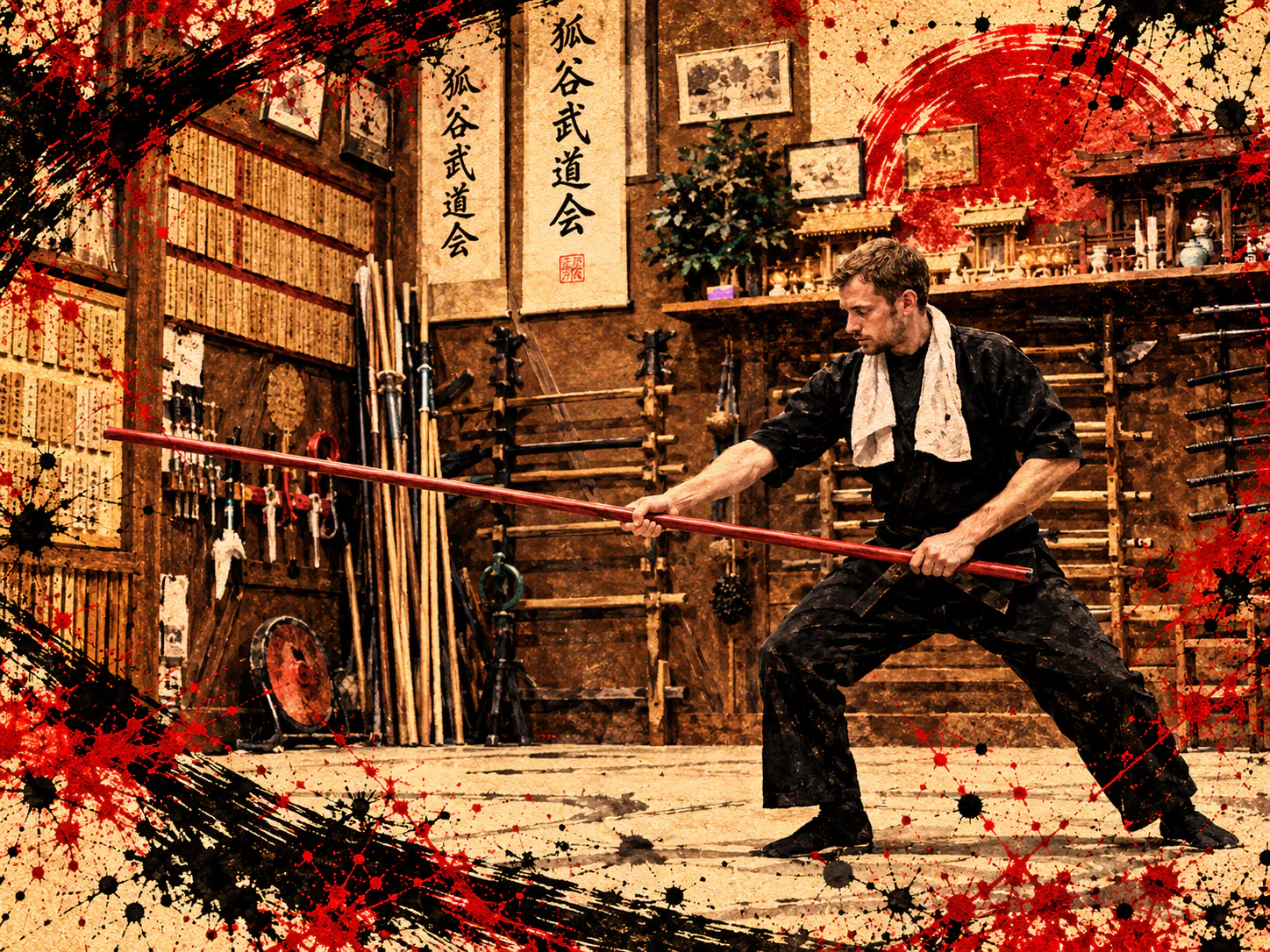
We live in a remarkable age. Nearly anything we want to know is accessible through a search engine, a video, or a conversation with artificial intelligence. We can learn about distant cultures, explore complicated ideas, and watch experts demonstrate extraordinary abilities without ever leaving our homes.
Yet there is something that technology cannot simply give us: the ability to do something we have never practiced.
You can watch someone play the piano, but that does not make you a pianist. You can study the mechanics of swimming, but you still have to enter the water. You can ask artificial intelligence to explain a martial arts technique, but it cannot develop your balance, coordination, or timing for you.
Some things must still be learned through direct experience.
This is the idea behind what we call the Analog Challenge: step away from consuming information for a little while and devote yourself to developing a real skill.
Traditional Japanese martial arts offer one particularly rewarding way to take that challenge.
We Have More Information Than Ever. But What Can We Actually Do?
The modern world has made access to knowledge extraordinarily convenient. College students can research subjects in minutes that once required hours in a library. Online tutorials provide detailed explanations of nearly every imaginable activity.
These developments are valuable. Technology has opened educational opportunities that previous generations could scarcely imagine.
However, access to information should not be confused with the possession of skill.
Knowing the steps involved in a physical activity is different from having developed the perception, coordination, and experience required to perform those steps effectively.
Consider a martial arts student learning to maintain balance while moving with a training partner. An instructor can explain the principles of posture, weight distribution, and positioning.
The explanation may be perfectly clear, but the student must still discover how those principles operate within their own body.
The ability develops through practice, correction, and repeated experience.
Information can guide the process. It cannot replace the process itself.
What Makes an Analog Experience Different?
Much of our daily activity is mediated through screens. We communicate through messages, attend virtual meetings, watch videos, and spend time navigating digital environments.
In many of these activities, the body remains relatively passive while the mind processes information.
Traditional martial arts require a different kind of participation.
You must stand, move, observe, and respond to another person. Your balance changes as you shift your weight. Your posture influences the movement of your arms and legs.
The distance between you and your training partner matters. So does the timing of your movement.
These relationships cannot be experienced fully through a screen.
They must be investigated through physical practice.
This is not an argument against technology. It is a recognition that different activities develop different kinds of abilities.
The dojo provides an environment where the body becomes an active participant in learning.
身体知 (Shintai-chi): Knowledge That Lives in the Body
One useful concept for understanding physical learning is 身体知 (shintai-chi), often rendered as embodied or bodily knowledge.
It describes a kind of understanding expressed through trained physical capability rather than through words alone.
Imagine riding a bicycle. Someone may explain the physics of balance, the relationship between speed and steering, and the importance of maintaining an upright position.
Yet understanding those explanations does not immediately give a beginner the ability to ride.
That ability must be developed through direct experience.
Martial arts involve similar forms of learning.
A student gradually becomes better at recognizing changes in balance, responding to movement, and coordinating different parts of the body.
What initially requires conscious attention may, through continued practice, become more familiar and better coordinated.
This is one reason traditional martial arts cannot be reduced to a list of techniques.
The value lies not only in knowing the movements, but in developing the ability to perform them.
Watching Someone Else Improve Is Not the Same as Improving Yourself
Social media allows us to observe extraordinary achievements in almost every field.
A musician performs a complicated piece. An athlete demonstrates remarkable coordination. A martial artist executes an impressive technique.
We watch, react, and move on to the next video.
There is nothing inherently wrong with enjoying these demonstrations. They can be inspiring, informative, and entertaining.
But the experience of watching someone else's accomplishment is fundamentally different from undertaking the work required to develop an ability of our own.
We usually see the result, not the years of practice behind it.
The small mistakes, unsuccessful attempts, repeated corrections, and gradual improvements rarely appear in a short video.
In the dojo, those experiences become part of your own learning process.
You discover that a movement which appears effortless when performed by an experienced practitioner can be unexpectedly difficult.
You also discover that continued practice can gradually change what you are capable of doing.
There is a particular satisfaction in that process, because the improvement is genuinely yours.
稽古 (Keiko): The Education of Practice
In Japanese martial arts, practice is commonly called 稽古 (keiko).
The word refers to training or practice, but meaningful practice involves more than mechanical repetition.
A student must gradually learn to recognize mistakes, understand corrections, and refine their movements.
Consider the simple instruction to relax the shoulders during a technique.
A beginner may understand the instruction immediately, yet find it surprisingly difficult to carry out.
Their shoulders may tense automatically when concentrating or attempting to apply force.
Through practice, they gradually become aware of the tension and begin learning how to regulate it. Read more about relaxation and the appropriate use of strength.
The explanation has not changed. What has changed is the student's ability to act upon it.
This is a fundamental distinction between receiving instruction and acquiring skill.
Practice creates the opportunity for knowledge to become ability.
見取り稽古 (Mitori Geiko): Learning to Observe
Observation plays an important role in traditional martial arts education.
見取り稽古 (mitori geiko) refers to learning through watching and observing practice.
At first, a beginner may notice only the most obvious movements of an instructor.
They see the arms move, the feet change position, and a technique reach its conclusion.
With experience, they may begin noticing more subtle details: changes in posture, the relationship between the hips and shoulders, adjustments in distance, or the timing of a movement.
Learning to observe carefully is itself a developing skill.
In a world of short videos and rapidly changing content, this kind of sustained attention offers an interesting contrast.
Rather than moving quickly from one subject to another, the student learns to study the same movement repeatedly, discovering details previously overlooked.
Observation is then joined with direct physical practice, allowing students to investigate what they have seen.
工夫 and 自得: Discovering Something for Yourself
Two particularly important concepts in the development of martial skill are 工夫 (kufū) and 自得 (jitoku).
Kufū involves thoughtful effort, investigation, and finding ways to solve a problem.
Jitoku refers to understanding personally acquired through experience.
Imagine that an instructor explains how a change in positioning can affect a training partner's balance.
The student understands the words, but when attempting the movement, it does not work as expected.
The instructor demonstrates again and provides correction.
The student continues practicing, making small adjustments and observing the results.
Eventually, something begins to make sense through direct physical experience.
What was previously an explanation becomes an ability the student can begin to reproduce.
This is an important feature of learning: understanding must sometimes be personally discovered rather than simply received.
A search engine can provide an answer. An AI assistant can explain a principle.
But neither can undergo the experience of learning on your behalf.
Do Something That Doesn't Need Likes, Views, or Followers
Much of modern digital culture encourages us to share what we do.
We post photographs, record accomplishments, and sometimes evaluate experiences through the reactions they receive online.
Martial arts can provide a different kind of reward.
A small improvement in balance, a better understanding of distance, or a correction to posture may not be particularly impressive to an outside observer.
Yet to the student, these discoveries may represent meaningful progress.
The accomplishment exists whether anyone photographs it or not.
You do not need an audience to become better at something.
You do not need external recognition for your practice to have value.
The experience of developing a skill can be rewarding in itself.
The Analog Challenge for College Students in Elgin
For students attending Elgin Community College, Judson University, or other nearby institutions, college life can involve a demanding combination of lectures, assignments, employment, and personal responsibilities.
Much of that time may be spent studying, communicating, or working through digital devices.
A traditional martial arts dojo offers an opportunity to engage in something physically and intellectually different.
Rather than reading about how to move, you practice movement.
Rather than observing someone else's skill, you begin cultivating your own.
Rather than interacting entirely through digital communication, you work directly with training partners and an instructor.
Martial arts can also provide an activity that continues beyond the college years.
The skills and understanding developed through practice can remain subjects of study long after graduation.
For college students searching for activities in Elgin or South Elgin, traditional Japanese martial arts offer something beyond a conventional gym or another form of digital entertainment.
What Does the Analog Challenge Look Like in Practice?
The challenge does not require abandoning your phone, rejecting technology, or making dramatic changes to your daily life.
It begins with choosing to devote some of your time to learning a physical skill.
In a martial arts class, this may involve:
- Learning fundamental posture and movement.
- Practicing balance, coordination, and body mechanics.
- Working with a partner under appropriate supervision.
- Observing demonstrations and learning to recognize important details.
- Receiving corrections and gradually improving techniques.
- Developing the patience to practice something that cannot be mastered immediately.
You do not need prior martial arts experience to begin.
You also do not need to be an accomplished athlete. Training should take account of individual experience, readiness, and physical limitations.
The purpose is not to accomplish everything in a single class.
It is to begin a process of learning through direct experience.
修行 (Shugyō): Choosing to Practice Rather Than Simply Consume
In Japanese martial traditions, 修行 (shugyō) is associated with disciplined, sustained training.
The concept suggests a relationship with practice that extends beyond occasional participation.
Skill requires time, correction, attention, and repeated effort.
Progress may be gradual, and the practitioner often discovers that the more they learn, the more remains to be understood.
This stands in contrast to forms of entertainment that offer immediate novelty with little required commitment.
Martial arts ask something of the participant.
They ask us to show up, pay attention, confront difficulties, accept correction, and continue practicing.
These demands are part of what makes the experience meaningful.
The reward is not simply that we have consumed something interesting.
It is that we have gradually become capable of doing something we could not do before.
Take the Analog Challenge at Fox Valley Budō Kai
Fox Valley Budō Kai is a traditional Japanese martial arts dojo based in South Elgin, Illinois.
Our planned primary program is Bujinkan Budō Taijutsu, through which students investigate movement, posture, balance, timing, distance, and the underlying principles of martial techniques.
Training emphasizes direct instruction, observation, partner practice, correction, and the gradual development of skill.
We welcome inquiries from beginners and experienced practitioners ages 15 and older.
Students attending Elgin Community College, Judson University, and other nearby colleges are welcome to explore training opportunities at our dojo.
Opening is planned for early 2027 in South Elgin, with prospective students from Elgin, St. Charles, Bartlett, and surrounding Fox Valley communities welcome to inquire. See our planned schedule and enrollment information for current details.
If you are searching for a meaningful activity beyond the classroom, the gym, or another evening in front of a screen, traditional Japanese martial arts may be worth exploring.
Learn Something Real
Our digital world provides extraordinary access to information, entertainment, and communication.
There is much to appreciate about these advances.
Yet not every meaningful experience can be delivered through a screen.
A description of balance is not balance. An explanation of timing is not timing. Watching someone perform a skill is not the same as possessing that skill.
Some things must still be learned by doing.
The Analog Challenge is an invitation to rediscover that process.
Spend less time watching others accomplish something.
Spend some time developing an ability of your own.
Learn something you can't download.