New Students
Is 40 Too Old to Start Martial Arts?
Thinking about starting martial arts at 40? Explore beginner expectations, fitness, flexibility, and sustainable training in South Elgin.
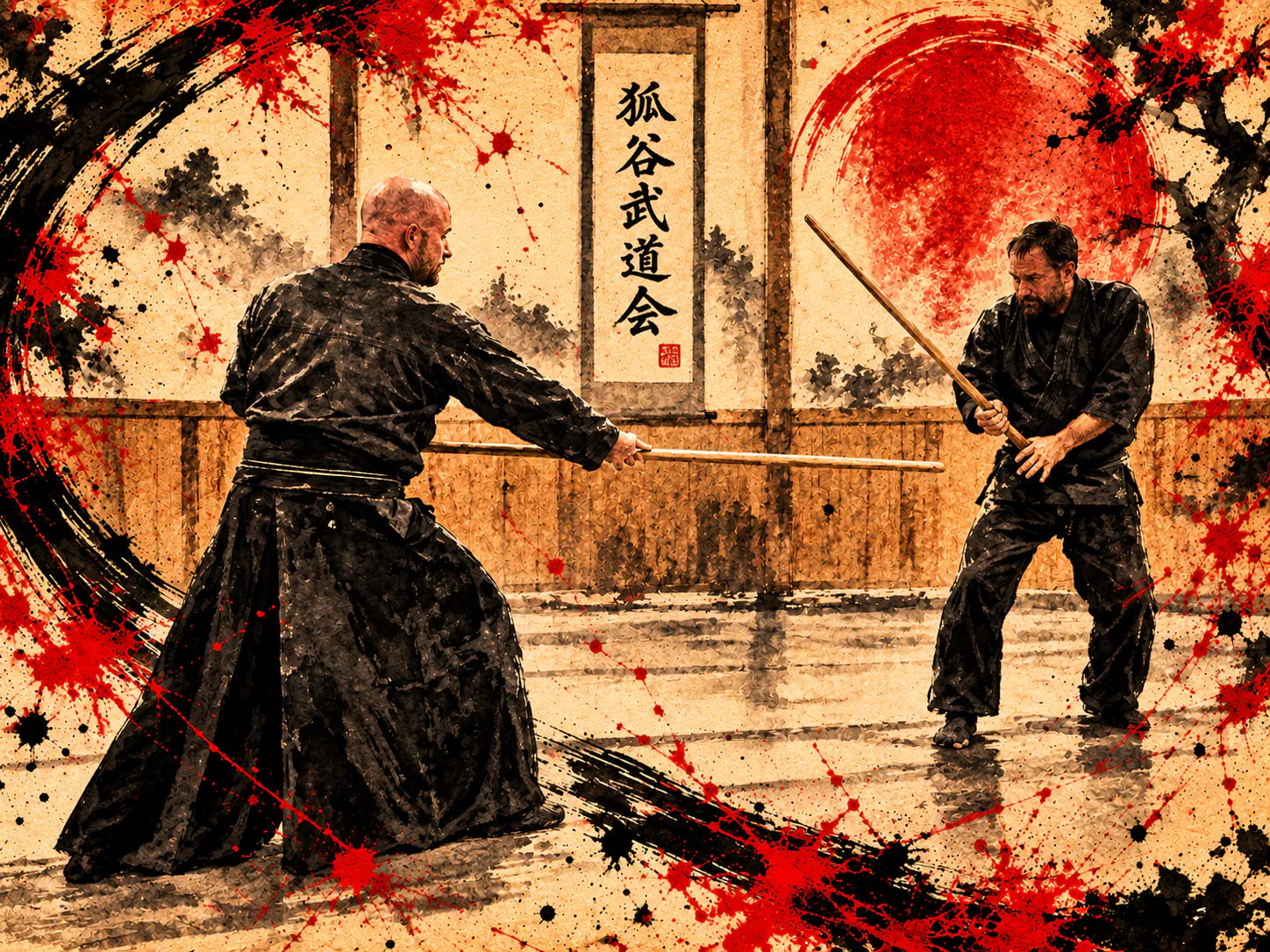
Perhaps you have always been interested in martial arts but never found the time to begin. Between work, family, and other responsibilities, the years passed, and now you find yourself wondering whether you have missed your opportunity.
You may be approaching forty, already in your forties, or even older. You might be concerned about your flexibility, fitness, or ability to keep up with younger students.
The good news is that forty is not too old to begin martial arts. While age, physical condition, and individual limitations should influence how you train, they do not automatically prevent you from beginning.
Traditional Japanese martial arts offer opportunities to study movement, coordination, balance, timing, and the development of skill. These are subjects that can be explored at different ages and levels of experience.
At Fox Valley Budō Kai in South Elgin, Illinois, we approach martial arts as an ongoing process of learning rather than a pursuit reserved exclusively for the young.
Why Age Does Not Determine Your Ability to Learn
It is true that physical capabilities change with age. Recovery, mobility, strength, and endurance can differ considerably between individuals and across different stages of life.
However, learning a martial art involves more than possessing exceptional physical attributes.
A beginner must learn how to coordinate unfamiliar movements, recognize changes in balance, understand distance, and respond appropriately to a training partner.
These are skills developed through instruction and practice rather than abilities that someone must already possess before entering the dojo.
Adults also bring qualities that can support the learning process. Life experience, patience, discipline, and a willingness to examine one's mistakes can all contribute to meaningful practice.
Beginning at forty does not mean you will progress in exactly the same way as someone beginning at eighteen. Nor should that necessarily be your objective.
The relevant question is whether you can develop greater understanding and ability through appropriate training.
For many people, the answer is yes.
Do You Need to Get in Shape Before Starting Martial Arts?
One of the most common reasons adults postpone martial arts is the belief that they must first become stronger, more flexible, or physically fit.
While general conditioning can help support training, you do not need to reach an arbitrary level of athletic performance before attending a beginner class.
Much of early martial arts training involves becoming familiar with movement patterns, learning basic coordination, and gradually developing physical awareness.
A beginner may initially find even simple movements unfamiliar or challenging. This is normal.
The purpose of training is to develop abilities through practice, not to demonstrate that you already possess them.
That said, martial arts can involve falling, joint manipulation, striking, and other physically demanding activities.
If you have an injury, medical condition, or concerns about participating safely, discuss those concerns with an appropriate healthcare professional and communicate any relevant limitations to your instructor.
A responsible approach to training takes individual abilities and limitations into consideration.
Martial Arts Are Not Simply About Strength
A common misconception is that martial arts techniques work primarily because a person is stronger or faster than their training partner.
Strength and athletic ability certainly matter in physical confrontations. However, traditional Japanese martial arts also investigate how movement, positioning, balance, timing, and coordination influence the performance of techniques.
An important concept in Japanese martial arts is 脱力 (datsuryoku), commonly associated with releasing unnecessary muscular tension.
When beginners encounter unfamiliar movements, they often attempt to compensate by using excessive force.
The shoulders become tense, the arms stiffen, and movements may become less coordinated.
Learning to recognize and reduce unnecessary tension can help students move more efficiently.
This does not mean becoming weak or completely relaxed. Effective movement still requires muscular engagement, appropriate structure, and control.
Instead, students learn to apply effort when and where it is needed.
For adults concerned about relying on physical strength, this introduces a different way of thinking about movement.
What If You Are Not Very Flexible?
Another common concern among adult beginners is flexibility.
People sometimes imagine that martial arts require high kicks, extreme stretches, or exceptional mobility from the very first class.
Different martial arts place different demands on flexibility. However, students beginning traditional Japanese martial arts are not expected to possess advanced mobility immediately.
Training involves developing greater awareness of how your body moves and learning to work appropriately within your present abilities.
Your range of motion may improve with suitable practice, but progress varies among individuals.
The objective should not be forcing your body into positions it cannot safely maintain.
Instead, good training emphasizes control, appropriate progression, and sound movement.
Adults Often Approach Learning Differently
One advantage of beginning martial arts later in life is the experience you bring to learning.
Adults have already spent years developing skills through work, education, hobbies, and everyday activities.
They often understand that meaningful improvement requires patience, correction, and continued practice.
In Japanese martial arts, training is commonly called 稽古 (keiko).
Meaningful practice involves more than repeating the same movement without thought.
Students must gradually recognize mistakes, understand corrections, and refine their performance.
An adult learner who approaches training thoughtfully may find satisfaction in small improvements that are not immediately apparent to an outside observer.
A slight change in posture, better coordination, or a more precise sense of timing can represent meaningful progress.
Learning becomes less about demonstrating what you can already do and more about discovering what you can become capable of doing.
守破離 (Shuhari): Everyone Begins with the Fundamentals
One useful concept for understanding the development of martial skill is 守破離 (shuhari).
This traditional Japanese framework is often explained through three broad stages of learning:
- 守 (Shu): Learning and preserving the fundamental forms and methods taught by the instructor.
- 破 (Ha): Deepening understanding and examining the principles underlying those forms.
- 離 (Ri): Developing an integrated understanding that allows the principles to be expressed with greater freedom.
Although interpretations differ, shuhari illustrates an important principle: meaningful skill develops upon a foundation.
It does not matter whether a student begins at sixteen, twenty-five, or forty-five.
Everyone must begin by learning the fundamentals.
Being older does not mean skipping the learning process, but neither does it prevent you from participating in it.
The objective is not to rush through the earliest stages of training. It is to build a foundation that can support continued development.
What Should You Expect in Your First Martial Arts Class?
Beginning something unfamiliar can feel intimidating, particularly when you are joining a group that includes experienced students.
However, new students are not expected to understand martial arts terminology, techniques, or etiquette before arriving.
An introductory class may include basic posture and movement, simple coordination exercises, demonstrations, and supervised partner practice.
Depending on the lesson, you may be introduced to:
- Fundamental body movement and posture
- Balance and coordination
- Distance and positioning
- Basic Japanese martial arts etiquette
- Carefully supervised partner exercises
- Principles of Bujinkan Budō Taijutsu
You do not need to perform everything correctly on your first attempt.
The purpose is to experience the training, meet the instructor, and determine whether the practice is something you would like to pursue. Our guide to your first traditional martial arts class explains how to prepare.
How Often Should You Train When Starting at 40?
Adults frequently balance work, family responsibilities, and other demands on their time.
When beginning martial arts, choosing a sustainable schedule is more valuable than committing to an unrealistic amount of training.
Attending one or two classes per week may provide a manageable introduction for some beginners, depending on training intensity, individual readiness, and recovery.
What matters is consistency and the quality of practice.
Progress does not necessarily require training every day, particularly when learning fundamental skills.
As your understanding develops, you can reassess your training frequency according to your goals and physical circumstances.
Martial arts are not a race against younger students.
The goal is to establish a practice you can continue. Check our planned schedule and enrollment information for current details.
Martial Arts Can Become a Lifelong Practice
Traditional Japanese martial arts provide opportunities for continued learning well beyond the earliest stages of training.
As students gain experience, they may begin examining increasingly subtle aspects of movement, coordination, balance, and timing.
A movement learned in the first month of training may remain a subject of study years later.
Within Japanese martial traditions, the concept of 修行 (shugyō) is associated with sustained, disciplined practice.
This offers a useful way of considering martial arts beyond immediate physical accomplishments.
The purpose is not simply to reach a particular rank or accumulate techniques.
It is to continue refining understanding and ability through practice.
Beginning at forty may provide many years of meaningful study.
Rather than asking whether you should have started twenty years ago, it may be more useful to consider what you could begin learning today.
Finding Adult Martial Arts Classes in South Elgin and the Fox Valley
If you live in South Elgin, Elgin, St. Charles, Bartlett, or another nearby Fox Valley community, choosing the right training environment is an important first step.
Look for a dojo that welcomes adult beginners, explains training clearly, and considers individual abilities and experience.
A good instructor should be able to explain fundamental movements, provide constructive feedback, and establish appropriate safety expectations.
You should also consider class times, travel distance, tuition, and whether the training environment matches your interests.
At Fox Valley Budō Kai, opening is planned for early 2027 in South Elgin. Our planned primary program is Bujinkan Budō Taijutsu for teens and adults ages 15 and older.
Our approach emphasizes the gradual development of skill through direct instruction, observation, correction, and continued practice.
We welcome inquiries from beginners and experienced practitioners ages 15 and older.
If you are considering martial arts for the first time, you may also want to read our guide to choosing a martial arts dojo in the Fox Valley .
The Best Time to Begin Is When You Are Ready to Learn
Starting martial arts at forty is not the same as starting at fifteen. Your goals, physical abilities, and life circumstances may be different.
But these differences do not make the pursuit any less worthwhile.
Martial arts training offers an opportunity to learn unfamiliar skills, investigate how your body moves, and develop greater understanding through direct experience.
You do not need to become flexible, athletic, or technically skilled before your first class.
Those are qualities that may develop through appropriate training.
You also do not need to compare your progress with someone who began decades earlier.
The relevant question is not how much time has already passed.
It is whether you are willing to begin learning now.
Forty is not too old to start martial arts. It is simply another age at which to begin.